

Why espresso
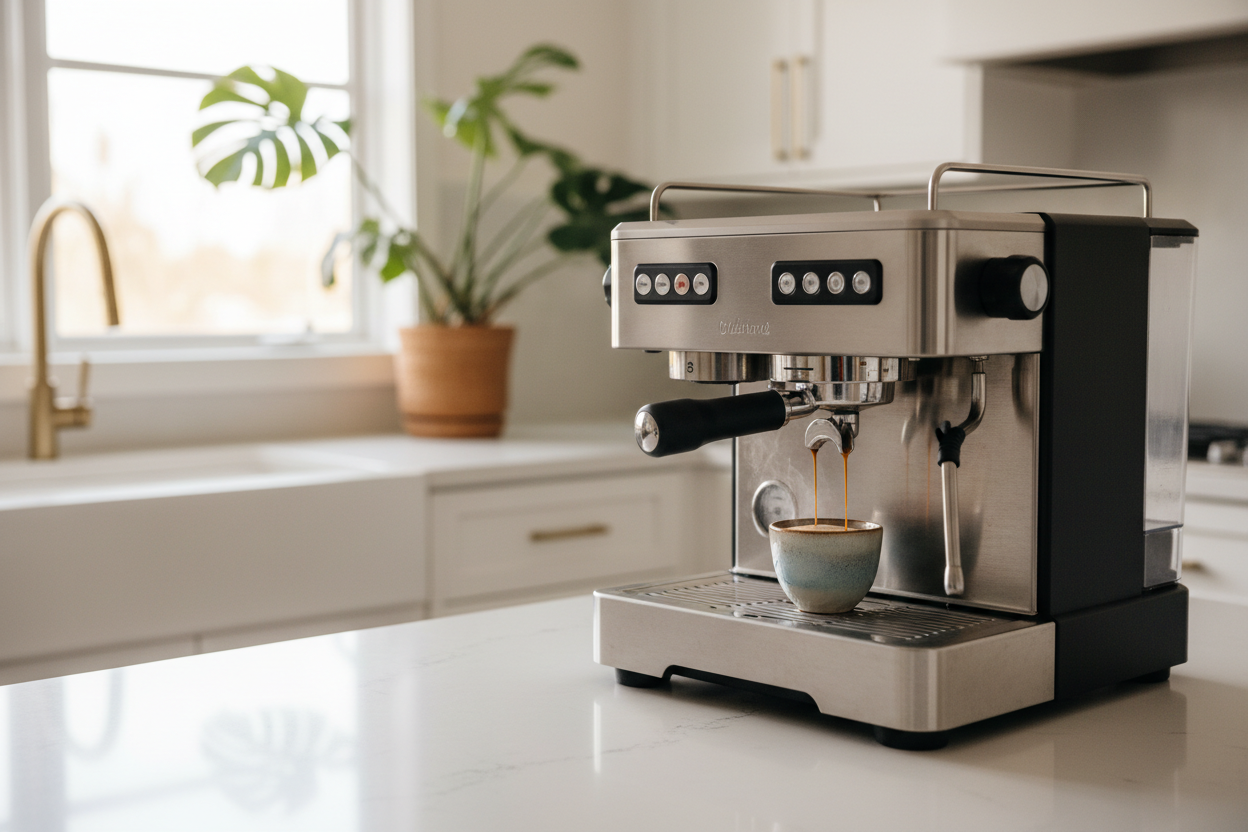
Espresso is coffee at full volume — concentrated, intense, and the base for everything from a straight shot to a flat white. It's the most demanding method on this list, but also the most rewarding, and it's where a bold dark roast like Dark Matter truly belongs.
What you need
- An espresso machine + portafilter
- A grinder that goes fine and consistent (this matters more than the machine)
- A scale and a tamper
- The ratio: 18g in → 36g out (a classic 1:2 "double shot")
- Grind: fine, like powdered sugar — adjustable
The method
- Grind 18g fresh into your portafilter. Always grind right before pulling.
- Distribute and tamp level with firm, even pressure. An uneven puck = an uneven shot.
- Lock in and pull. Put a cup on the scale, zero it, and start the shot.
- Watch the clock and the scale. You're aiming for 36g of espresso in 25–30 seconds.
- Read the shot. Too fast (under 20s) means grind finer. Too slow (over 35s, dripping) means grind coarser. Adjust one variable at a time.
Dialing in (the real skill)
Espresso is a feedback loop. Change the grind, pull again, taste, repeat. Sour and fast = grind finer. Bitter and slow = grind coarser. Once you find the setting where 18g gives you 36g in ~27 seconds and tastes balanced, write it down.
Troubleshooting
- Sour, thin, gushing? Grind finer.
- Bitter, dark, dripping slow? Grind coarser.
- No crema? Usually stale beans or too coarse a grind — neither is a problem with fresh Dark Matter.
The CRBN note
Dark Matter was made to be pulled — bittersweet dark chocolate, molasses, and that signature smoky finish stand up to milk and shine on their own. Heavy on flavor, heavy on impact: 20% of every bag still goes to kids' programs. Wake up. Sip strong. Repeat.
Share:
French Press: Full-Bodied and Foolproof